Industry
UPS for Mining Operations & Remote Sites | Australia
Mining sites combine harsh environments (heat, dust, vibration) with critical safety, control, and SCADA systems that cannot tolerate power loss. UPS specifications must address ambient temperatures up to 50°C, vibration tolerance, and remote-site service logistics.
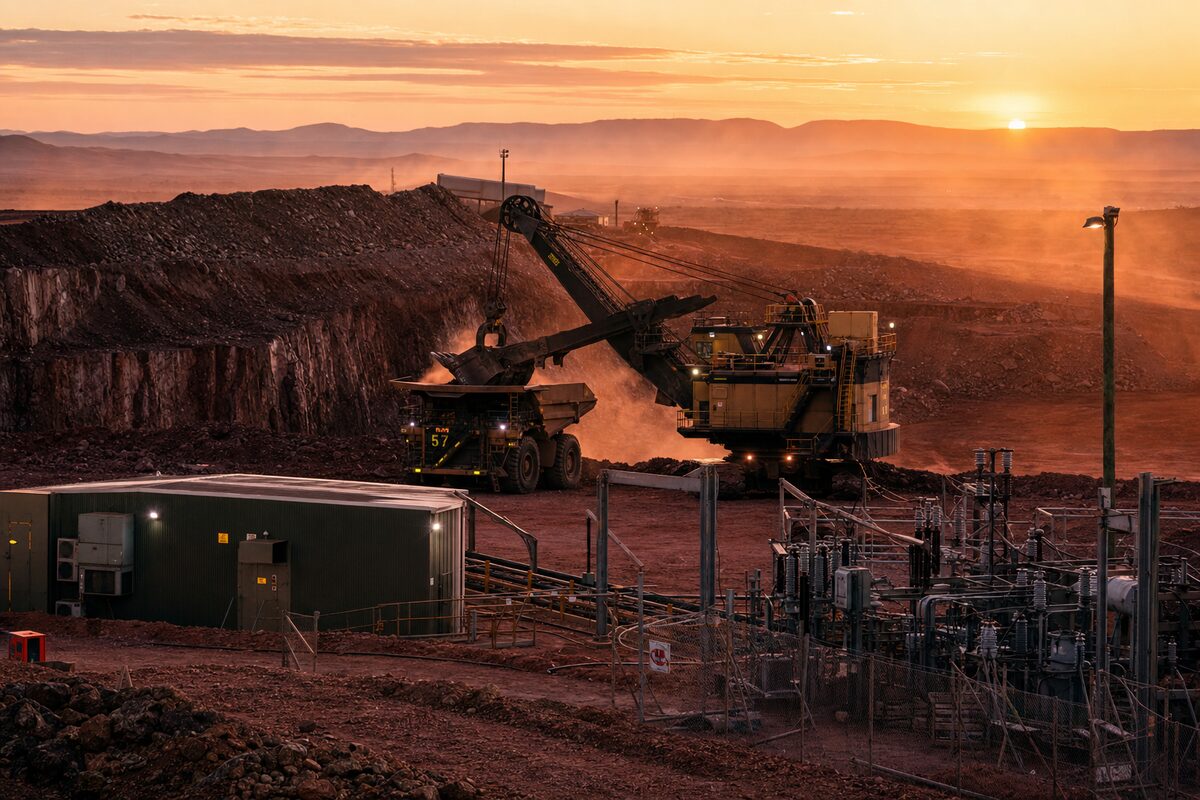
UPS Services supports Australian mining operations across Queensland, WA, and NT, including coal, iron ore, lithium, copper, and gold operations. We specify high-temperature UPS (e.g. PowerShield TC series), VRLA over lithium where ambient extremes apply, and design service contracts that account for remote-site mobilisation.
Power quality on mining sites is typically worse than urban environments: diesel generators introduce harmonics and frequency variation, long cable runs from site substations create voltage drop, and large motor starts on the same bus cause voltage dips. UPS must handle this input variability while delivering clean output to sensitive control and safety systems.
We understand the operational reality of mining service: site inductions, working-at-height permits, confined-space protocols, and the logistics of getting parts and technicians to remote locations. Our service contracts include mobilisation planning, spare parts stockholding, and emergency response times realistic for the site location.
Sector challenges
What makes mining & resources different.
5 critical design considerations that shape UPS architecture for this sector.
01 / 05
Ambient temperature
Pilbara surface ambients can exceed 45°C. Battery life halves for every 10°C above 25°C: VRLA batteries rated for 3-5 years at 25°C may last only 12-18 months at 45°C. High-temp UPS with active cooling or VRLA derating is mandatory. Lithium-ion has better thermal tolerance but AS/NZS 5139 requirements for fire separation can be difficult in mining environments.
02 / 05
Remote logistics
Service mobilisation to remote sites requires planning: parts availability, technician travel (sometimes fly-in), and emergency response windows realistic for the region. Our contracts include agreed response times with clear definitions of what "response" means at a remote site: technician onsite, not just phone call.
03 / 05
Hazardous areas
Underground or processing-plant locations may require IECEx-rated equipment in classified zones (Zone 1, Zone 2). Standard UPS equipment is not hazardous-area rated. Where required, we specify purged/pressurised enclosures or locate UPS in non-classified adjacent areas with appropriate cable segregation.
04 / 05
Diesel generator integration
Most mining sites run on diesel generation with poor power quality: frequency variation, harmonic content from VFDs, and step-load transients from large motor starts. UPS must have a wide input voltage/frequency window and robust input filtering to operate reliably on genset power.
05 / 05
Dust and vibration
Mining environments produce continuous dust and vibration. UPS equipment requires conformal-coated circuit boards, sealed enclosures (IP55+), anti-vibration mounting, and air filters that can be cleaned on a regular schedule without taking the UPS offline.
Typical configurations
UPS patterns we deploy.
- 01High-temperature UPS (50°C ambient)
- 02VRLA batteries (proven at high temp, replaceable)
- 03Three-phase UPS for control rooms
- 04Single-phase at SCADA RTU/PLC
- 05Outdoor-rated containment (IP55+)
- 06Industrial-grade with conformal coating
- 07Redundant UPS for emergency winder systems
Equipment
Recommended for this sector.
Manufacturer-trained installation and service across all major UPS brands.
- PowerShield TC series (high-temperature)
- Eaton 93PM (industrial, wide input)
- APC Galaxy VS (control rooms)
- Eaton 9PX (SCADA cabinets)
- Vertiv Liebert GXT5 (single-phase SCADA)
- IP55 outdoor containment solutions
- VRLA high-temp batteries (Yuasa, Vision)
When it matters
Real-world scenarios.
What goes wrong without proper UPS, and how the right architecture prevents it.
Scenario 01
SCADA loss causes conveyor collision
A SCADA PLC loses power during a voltage dip from a large motor start on the same distribution bus. The conveyor control system drops out, but the downstream conveyor keeps running, and material piles up and jams the transfer point, requiring 8 hours of manual clearing. A 3kVA UPS at the SCADA cabinet would have ridden through the 200ms dip.
Scenario 02
Battery failure in 45°C ambient
A control room UPS in the Pilbara runs on VRLA batteries rated for 25°C. At sustained 45°C ambient, the batteries degrade to 30% capacity within 18 months instead of the expected 3-5 years. A genuine mains outage reveals the runtime shortfall: the control room goes dark after 2 minutes instead of 15. High-temp battery derating and accelerated replacement scheduling prevents this.
Scenario 03
Emergency winder power loss
An underground mine emergency winder loses power during a site-wide diesel generator fault. The winder UPS had not been load-tested since installation 4 years ago. Personnel evacuation is delayed by 45 minutes. Annual load-bank testing of safety-critical UPS is not optional in mining.
Our services
Relevant services for mining & resources.
Frequently asked questions
4 questions answered.
Q01
What UPS works in 40-50°C ambient temperatures?
High-temperature UPS models from PowerShield (TC series), Eaton (93PM with extended temp option), and Vertiv (Liebert APM2 with top-hat cooling) are rated for 40-50°C operation. However, the UPS electronics tolerance is only half the story: batteries are the weak link. VRLA batteries must be derated for temperature (halving life per 10°C above 25°C) or replaced on an accelerated schedule. Lithium-ion has better thermal tolerance but requires AS/NZS 5139 compliant enclosures. We model the total cost of ownership including accelerated battery replacement when designing for high-temperature sites.
Q02
How do you service UPS at remote mine sites?
Our remote-site service contracts include: pre-planned mobilisation schedules aligned with site maintenance windows, parts stockholding at regional hubs, fly-in technician capability for Pilbara, Kimberley and NT sites, and agreed emergency response times. We also provide remote monitoring (SNMP) for early warning of battery degradation or alarm conditions, which allows us to pre-ship parts before a mobilisation.
Q03
Do I need IECEx-rated UPS for underground mining?
If the UPS is located in a classified hazardous area (Zone 1 or Zone 2 per AS/NZS 60079), yes. However, standard practice is to locate UPS in non-classified areas (control rooms, switch rooms) where the hazardous atmosphere does not exist. We design cable routes and distribution to bring protected power from the UPS in a safe area to the equipment in the hazardous area, avoiding the need for IECEx-rated UPS in most cases.
Q04
What is the typical UPS configuration for a mine control room?
A typical mine control room runs 10-30kVA of load (SCADA servers, operator workstations, communication equipment, safety systems). We specify a three-phase 40-60kVA UPS (oversized for growth and derating) with high-temperature batteries, 15-30 minutes of runtime, and an external maintenance bypass panel. The UPS input window must handle ±20% voltage variation and ±5Hz frequency drift from diesel generators.
Specify mining & resources